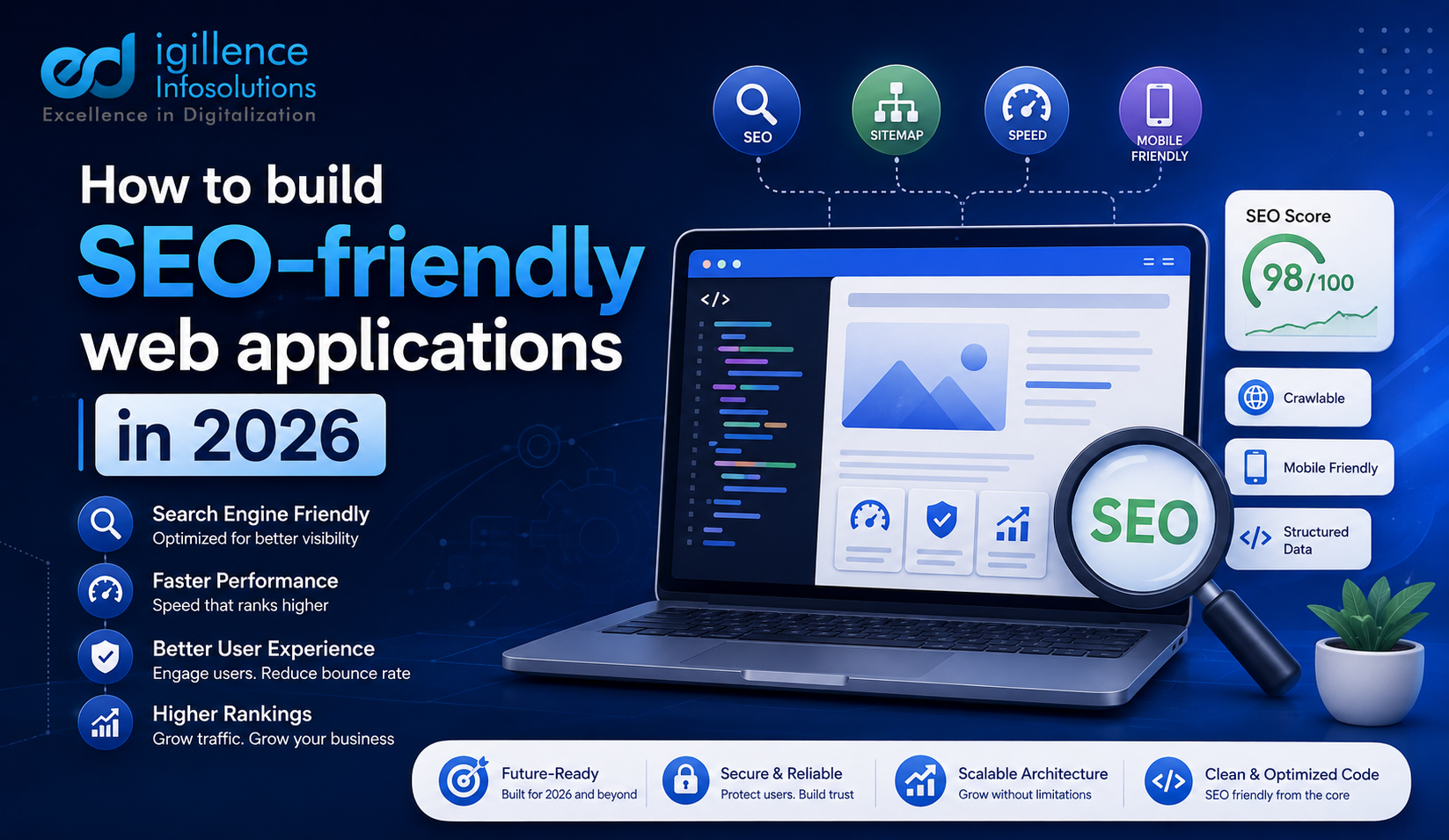
Most businesses invest heavily in building a web application, only to realize later that search engines can barely find it. The result? A feature-rich product that nobody discovers organically. This is where SEO-friendly web applications come in — and why more decision-makers are asking developers to build with search visibility in mind from day one, not as an afterthought.
If you're planning a new web app or auditing an existing one, understanding what makes an application SEO-friendly can save you months of lost traffic and missed leads.
What Are SEO-Friendly Web Applications?
An SEO-friendly web application is built so that search engines can crawl, render, and index its content correctly, while also giving users a fast, intuitive experience. Many modern web apps — especially those built on JavaScript frameworks like React, Angular, or Vue — look great to users but can be nearly invisible to search engine crawlers if not configured properly.
Being SEO-friendly isn't just about adding meta tags. It touches technical architecture, page speed, structured data, mobile responsiveness, and content accessibility. In short, it's the intersection of good engineering and good search strategy.
Why SEO-Friendly Architecture Matters for Businesses
A web application that isn't search-optimized essentially operates in a walled garden. Users who already know your brand can find it, but potential customers searching for your services on Google may never see it.
Here's why this matters for business outcomes:
- Lower customer acquisition cost — organic traffic reduces dependency on paid ads
- Better user trust — pages that load fast and appear in search results build credibility
- Long-term visibility — unlike ads, SEO gains compound over time
- Higher conversion potential — users arriving via relevant search queries are already interested
For startups and growing businesses working with limited marketing budgets, this compounding organic value often becomes a primary growth channel.
How SEO-Friendly Web Applications Work
At a technical level, several elements work together to make a web app discoverable:
1. Server-Side Rendering (SSR) or Static Site Generation (SSG)
Many single-page applications render content dynamically in the browser using JavaScript. Search engine crawlers don't always execute JavaScript the same way a browser does, which can mean your content simply isn't seen. SSR or SSG ensures content is available in the initial HTML response.
2. Clean URL Structures
URLs like /services/web-development are more crawlable and user-friendly than dynamically generated strings with query parameters.
3. Structured Data (Schema Markup)
Structured data helps search engines understand what a page is about — whether it's a product, service, article, or FAQ — which can also improve visibility in rich search results.
4. Core Web Vitals & Performance
Page speed, interactivity, and visual stability directly affect both user experience and search rankings.
5. Mobile Responsiveness
With mobile-first indexing being standard practice, an application must perform equally well across devices.
Key Features of a Well-Optimized Web Application
- Fast load times across devices
- Semantic HTML structure
- Optimized meta titles and descriptions per page/route
- Proper use of heading tags (H1, H2, H3)
- Accessible navigation and internal linking
- XML sitemap and robots.txt configuration
- Canonical tags to avoid duplicate content issues
Industries That Benefit From SEO-Friendly Web Apps
While every business with an online presence benefits from better visibility, certain industries see particularly strong returns:
- E-commerce platforms — product pages need to rank individually to capture buyer intent
- SaaS companies — feature and pricing pages often drive organic sign-ups
- Healthcare and service providers — local and informational searches convert well
- Real estate portals — listing pages depend heavily on search discoverability
- Education platforms — course and resource pages attract long-tail search traffic
Implementation Process: What to Expect
Building or retrofitting a web application for SEO typically follows these stages:
- Technical audit — identifying crawlability, rendering, and indexing issues
- Architecture planning — deciding on SSR/SSG approach based on the framework in use
- On-page optimization — structuring metadata, headings, and internal links
- Performance tuning — optimizing images, scripts, and Core Web Vitals
- Testing and validation — using tools like Google Search Console to confirm indexing
- Ongoing monitoring — tracking rankings, crawl errors, and content performance
Common Challenges Businesses Face
- JavaScript-heavy applications not rendering content for crawlers
- Duplicate or thin content across similar pages
- Slow load times due to unoptimized assets
- Missing or inconsistent metadata across pages
- Poor internal linking that limits how deep crawlers explore the site
Best Practices Going Forward
- Involve SEO considerations during the development phase, not after launch
- Regularly audit crawlability using Search Console
- Keep content updated and genuinely useful to the target audience
- Prioritize performance alongside design
- Build internal linking that reflects your actual information hierarchy
Why Choose eDigillence Infosolutions?
At eDigillence Infosolutions, we combine technical development expertise with search strategy — building applications that don't just function well but are also discoverable. Our team works across Web Development Services, SEO Services, and UI/UX Design Services to ensure that visibility isn't bolted on at the end — it's part of the foundation.
Whether you're building a new E-commerce Development Services platform, scaling a SaaS product, or optimizing an existing application through our Digital Marketing Services, our approach focuses on realistic, measurable outcomes rather than inflated promises.
Conclusion
SEO-friendly web applications aren't a luxury reserved for large enterprises — they're a practical necessity for any business that wants sustainable organic growth. From technical architecture decisions to ongoing content strategy, the way an application is built determines how visible it becomes.
If your current web application isn't performing the way it should in search results, it may be time for a closer look at its technical foundation. Get in touch with the best IT company in Ahmedabad today to discuss how we can help your web application become genuinely search-ready.
FAQs
1. What makes a web application SEO-friendly?
It combines crawlable architecture (like SSR/SSG), clean URLs, structured data, fast load times, and mobile responsiveness so search engines can properly index and rank its content.
2. Do single-page applications (SPAs) rank well on Google?
They can, but only with proper configuration such as server-side rendering or pre-rendering, since Google's crawler doesn't always process JavaScript the same way a browser does.
3. How long does it take to see SEO results after optimizing a web app?
Typically 3–6 months, depending on competition, existing domain authority, and how significant the technical changes were.
4. Is SEO optimization expensive for web applications?
Costs vary based on the scope of technical work required. A phased approach — starting with an audit — helps prioritize the highest-impact fixes first.
5. Can an existing web application be optimized without rebuilding it?
In many cases, yes. Issues like metadata, structured data, and internal linking can often be fixed without a full rebuild, though deeper rendering issues may need architectural changes.